A quick visit to Takefu Knife Village
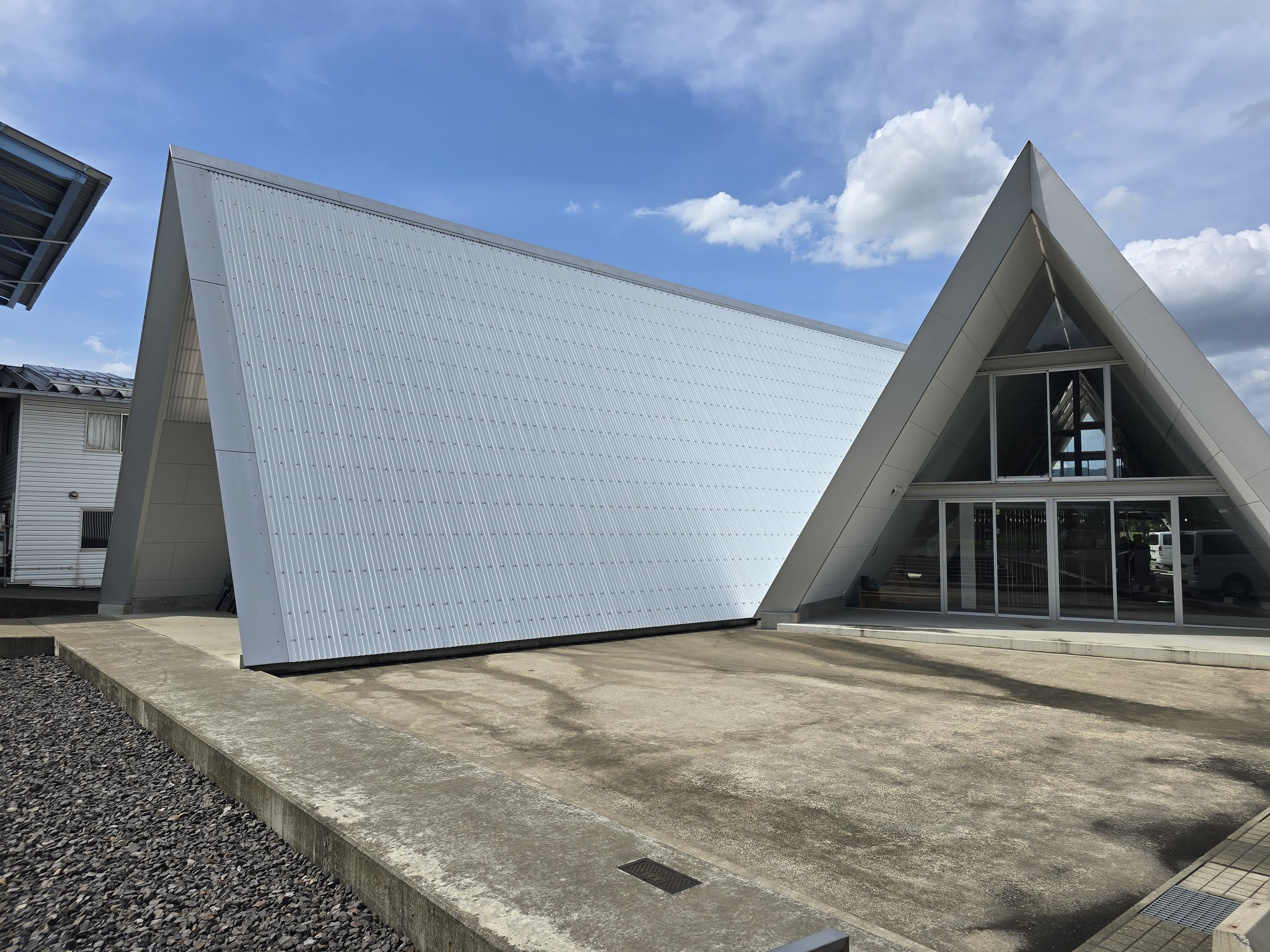
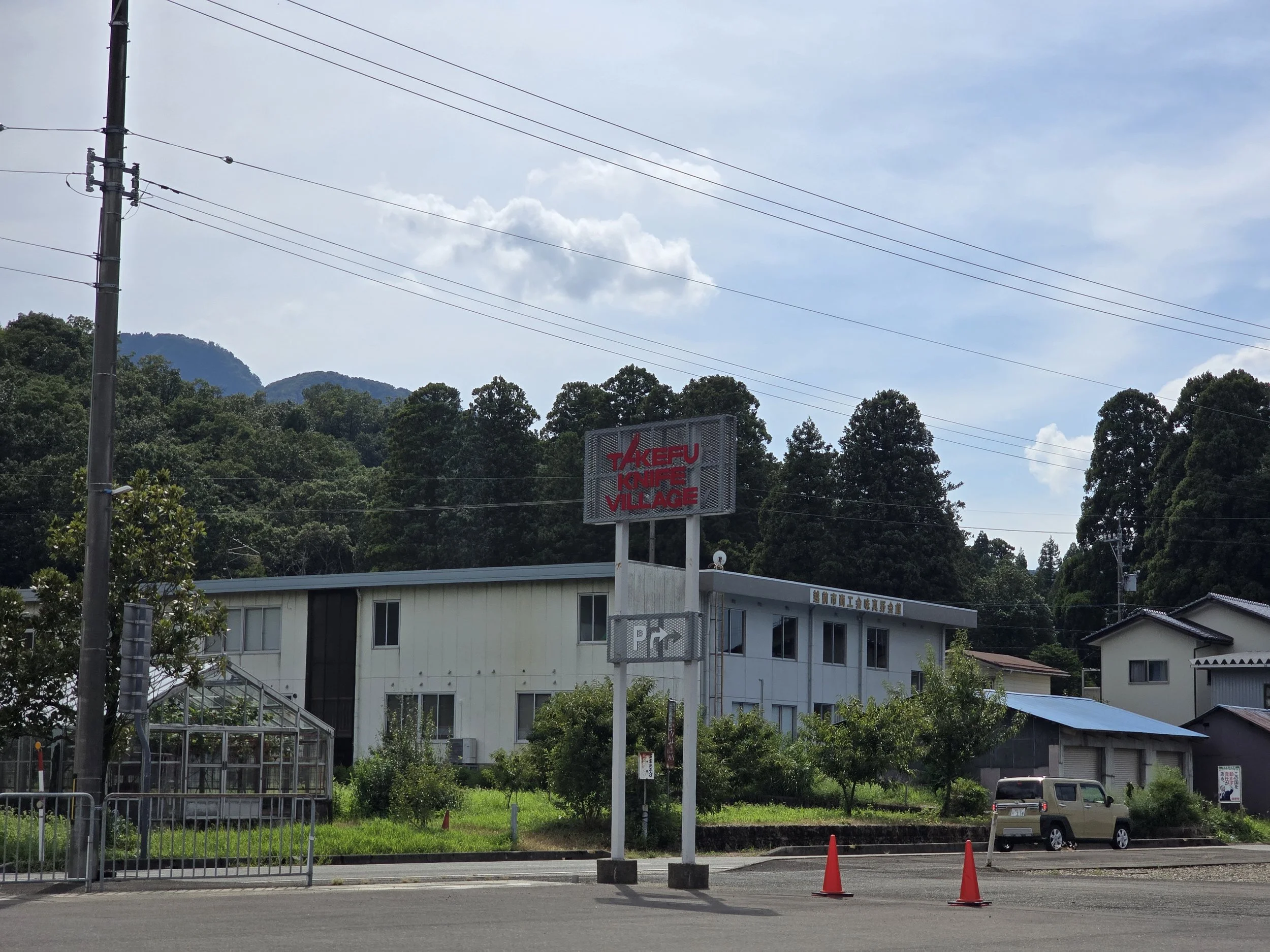
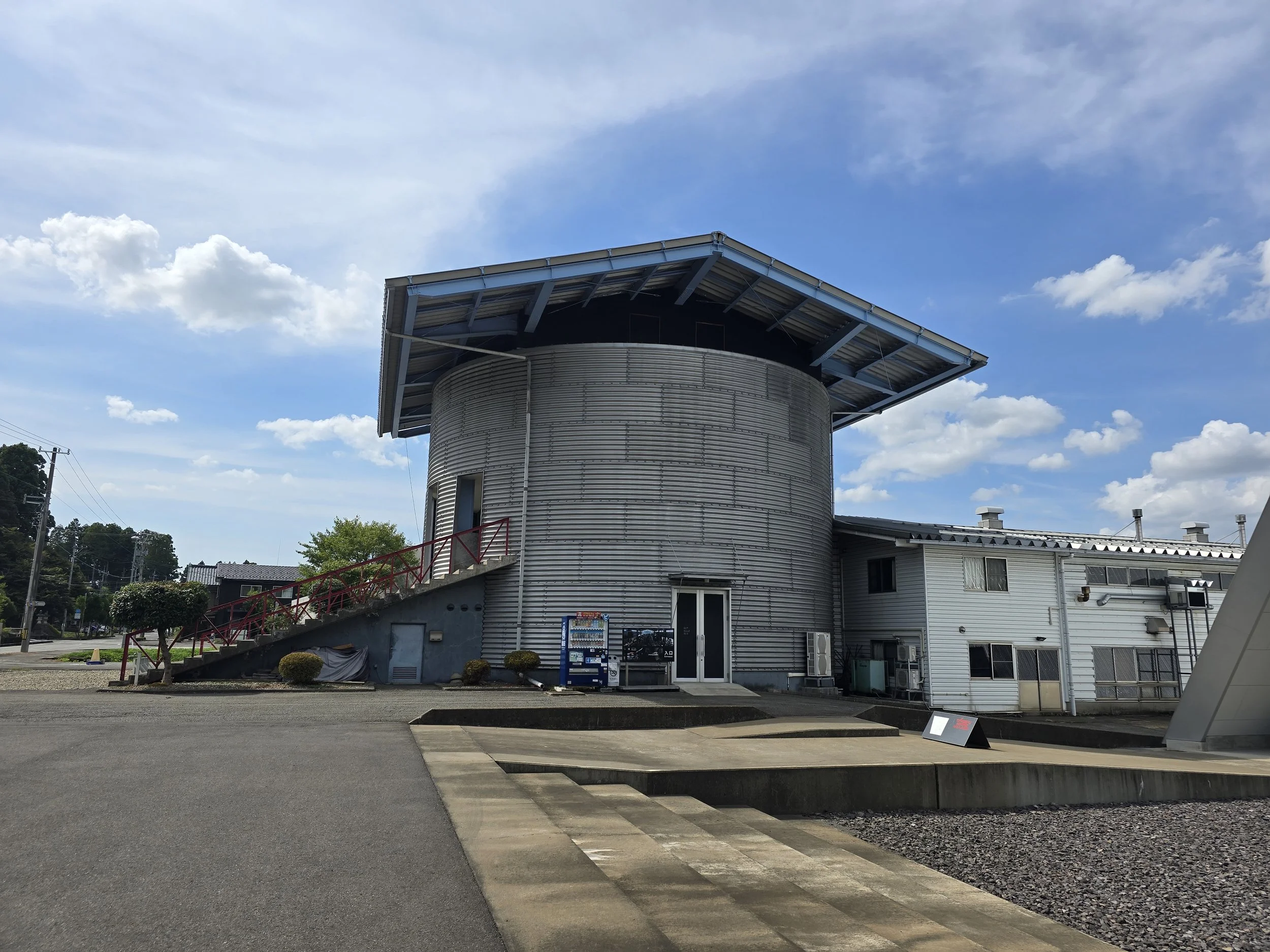
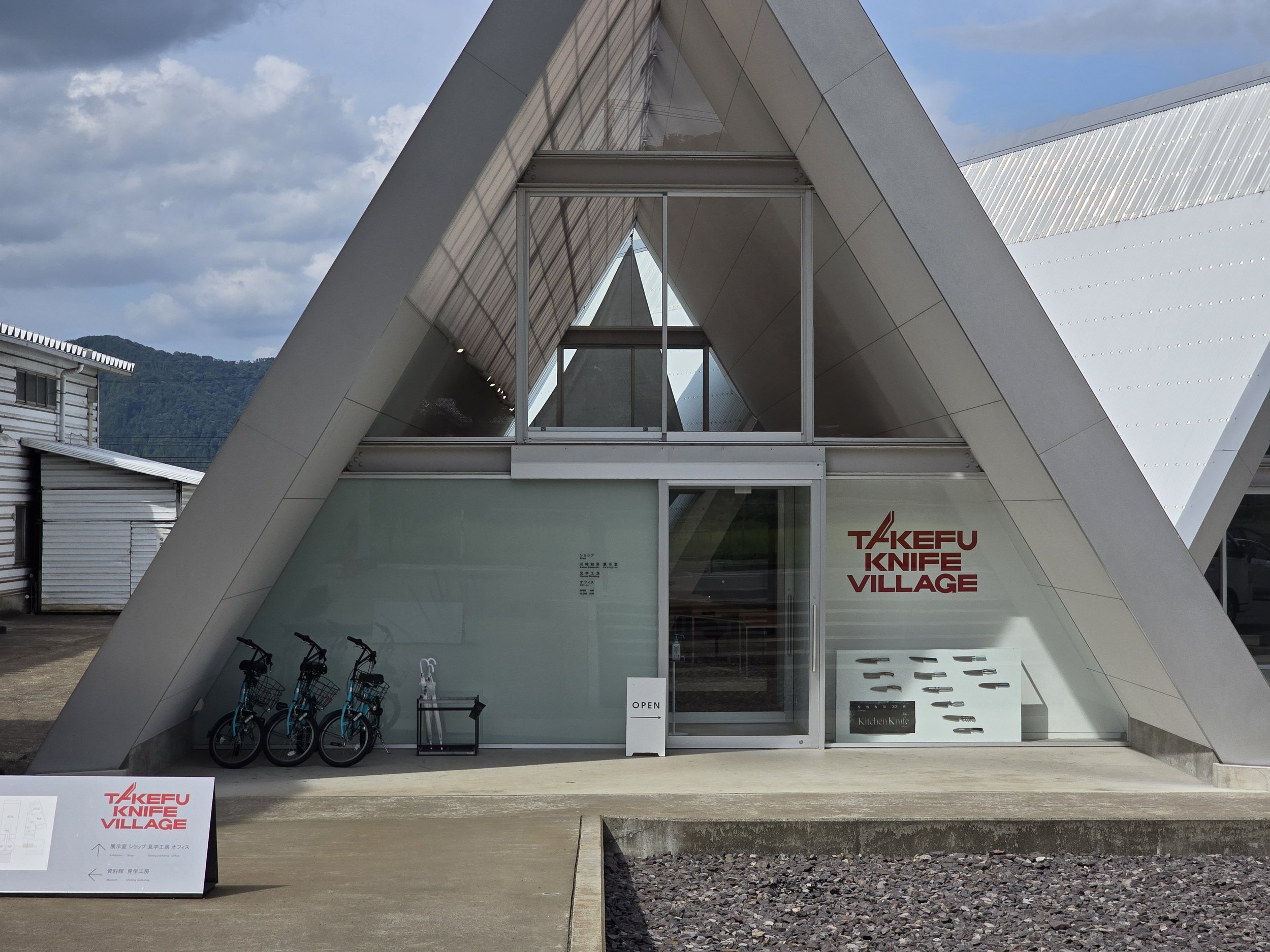
We were driving back home to Nagano from Osaka, and Takefu Knife Village had been on my list for a long time. It was one of those places I had always wanted to visit, but because it was a little out of the way, I had never actually made the detour for it. This time, while we were looking for somewhere to stop for lunch, I saw that it was nearby, so we decided to visit. It ended up being one of those stops that feels especially satisfying. Somewhere I had been meaning to see for a long time, but only ended up visiting because the timing happened to work out perfectly.
Some knives from my personal collection
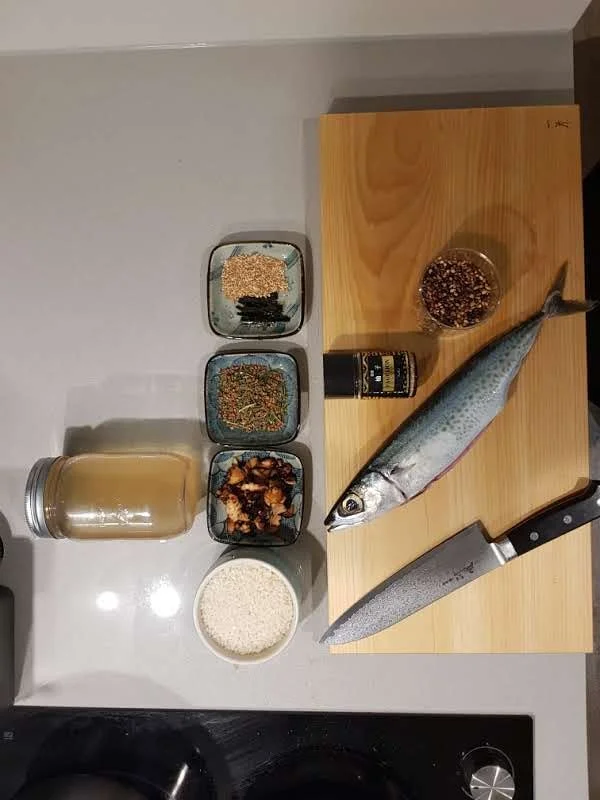
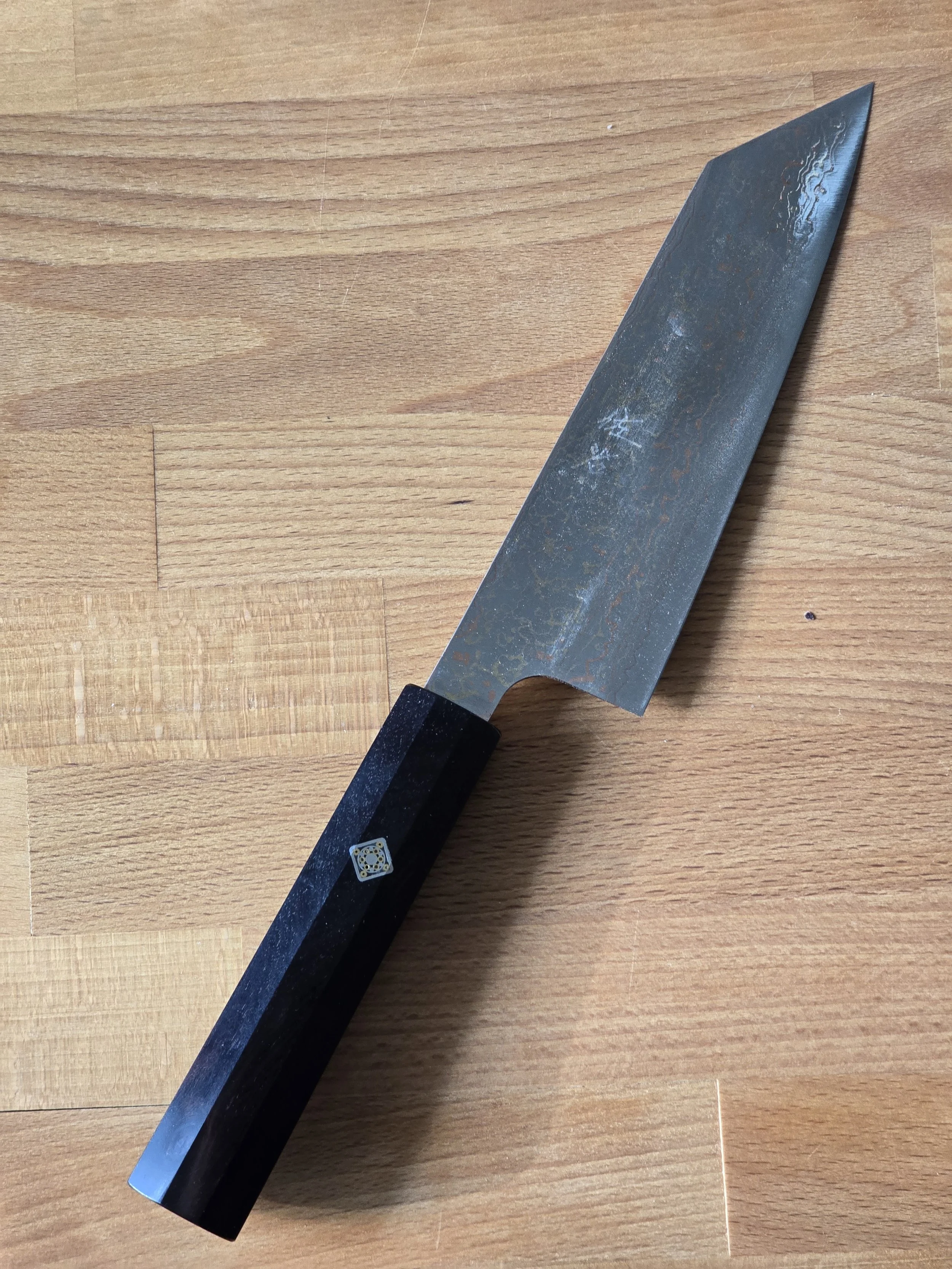
For me, it was also a place that already felt familiar before arriving. I had seen so many images online and read so much before visiting. I already own knives made by blacksmiths working out of Takefu Knife Village, so this was not just a random stop at a craft site or museum. Being able to visit the place where those makers work gave me a different level of appreciation for the knives themselves. When you use a knife at home, you mostly think about its performance, shape, edge, and how it feels in hand. Visiting Takefu adds another layer to that. You start to think more about the people behind the blade, the workshop environment, and the shared craft tradition that shapes the final product. Being able to see the workshop for the knives that I use daily was really great but also being able to see what goes into the knife to really justify the prices that these knives go for makes them seem really worth it.
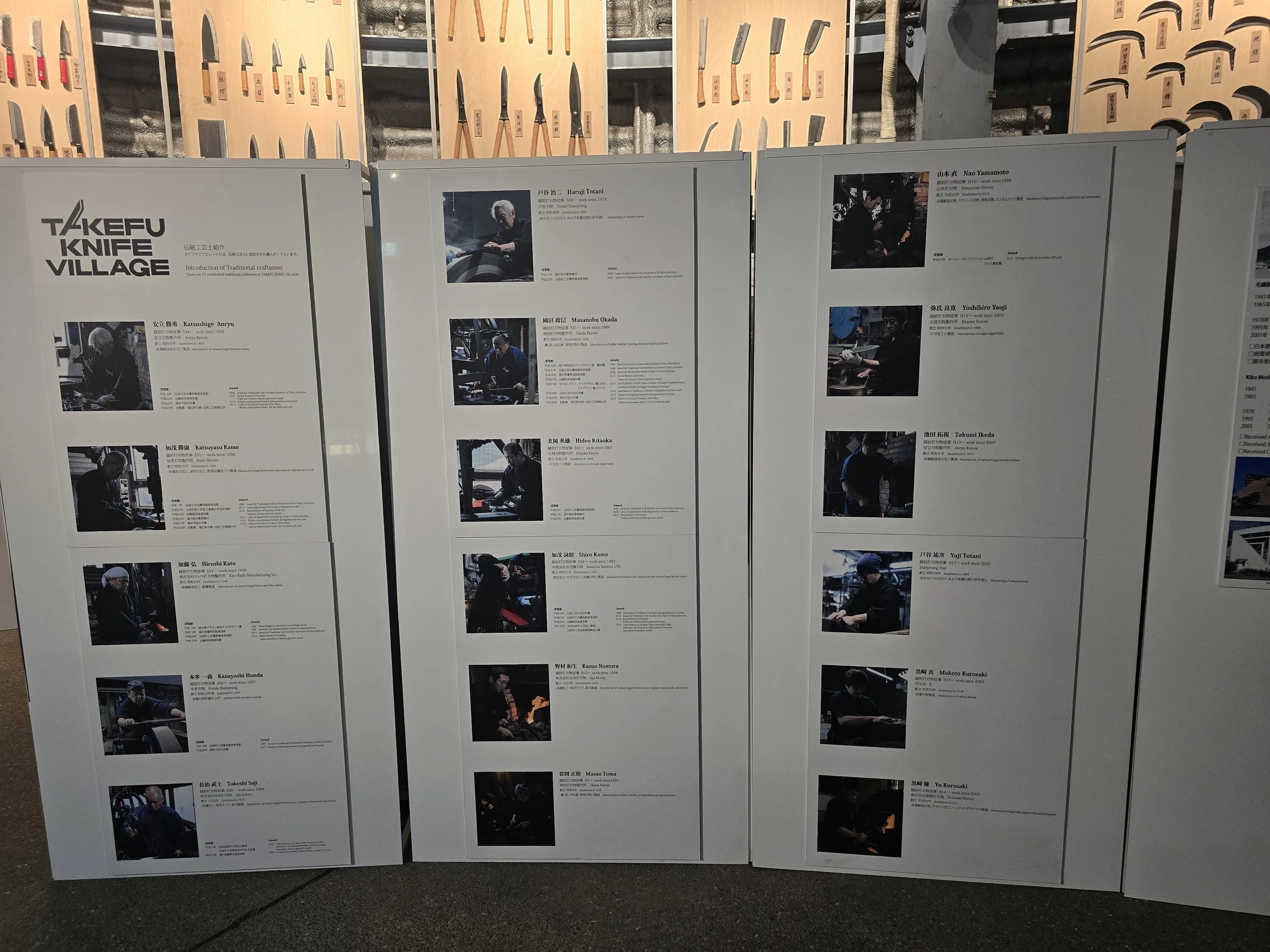
Inside, the exhibition space is clean and minimal, with the focus kept firmly on the knives, the makers, and the process. Large display boards introduce the craftsmen of Takefu Knife Village, showing the faces and names behind the work. That part stood out to me because it immediately gives more depth to the experience. Rather than presenting Japanese knives as anonymous objects of craftsmanship, the exhibition makes it clear that they are the result of individual makers, different specialisations, and years of accumulated skill.
One of the most interesting things about the exhibition is how clearly it shows that knife-making here is not just the work of a single person. The displays highlight a wide group of craftsmen, each with their own role and background. It reinforces the idea that the final knife is often the result of multiple stages of expertise, from forging and shaping through to sharpening and finishing. Seeing that makes you appreciate the knives in a different way. What looks like one finished object in a shop or at home actually carries the work of an entire local craft network.
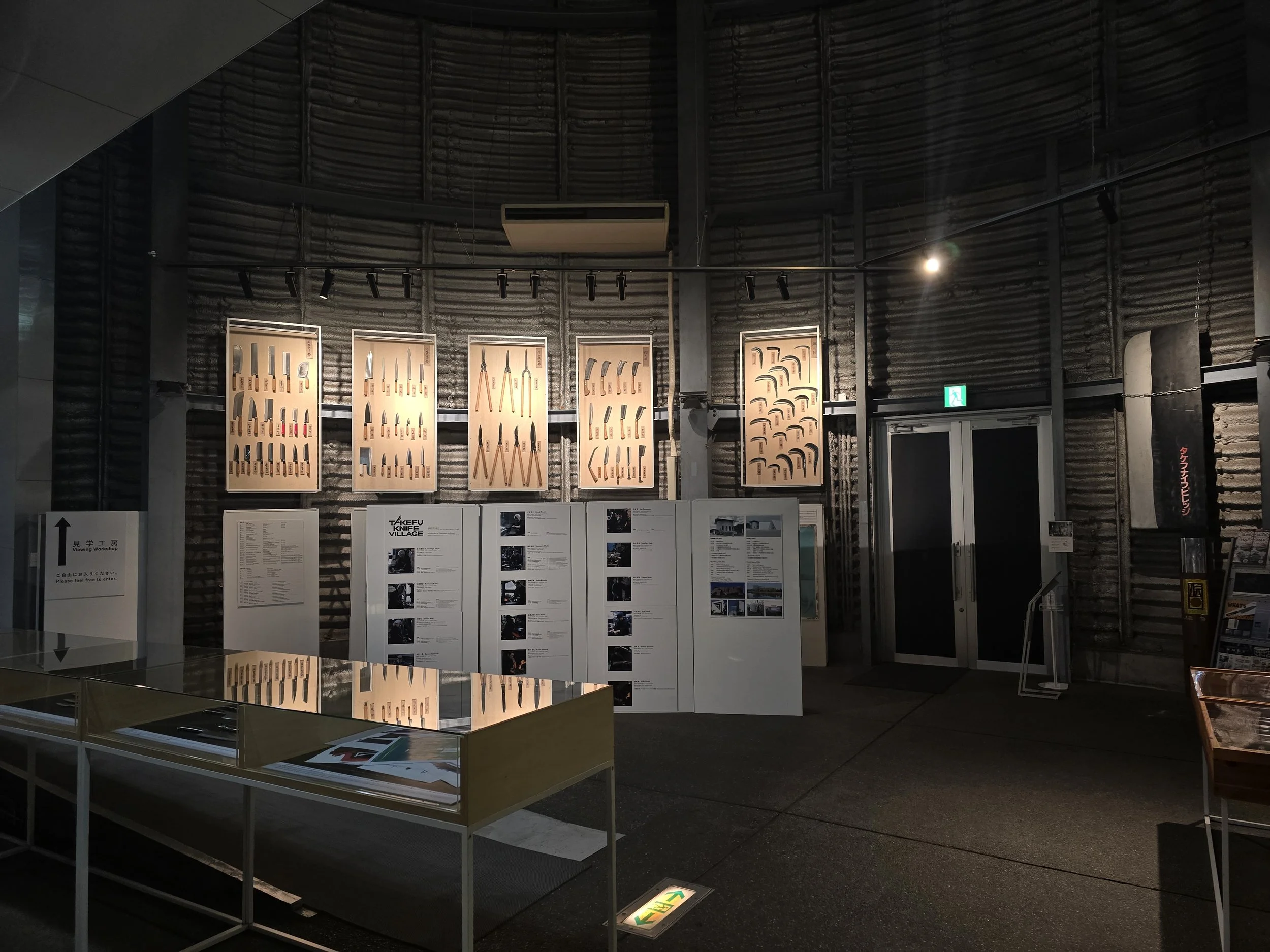
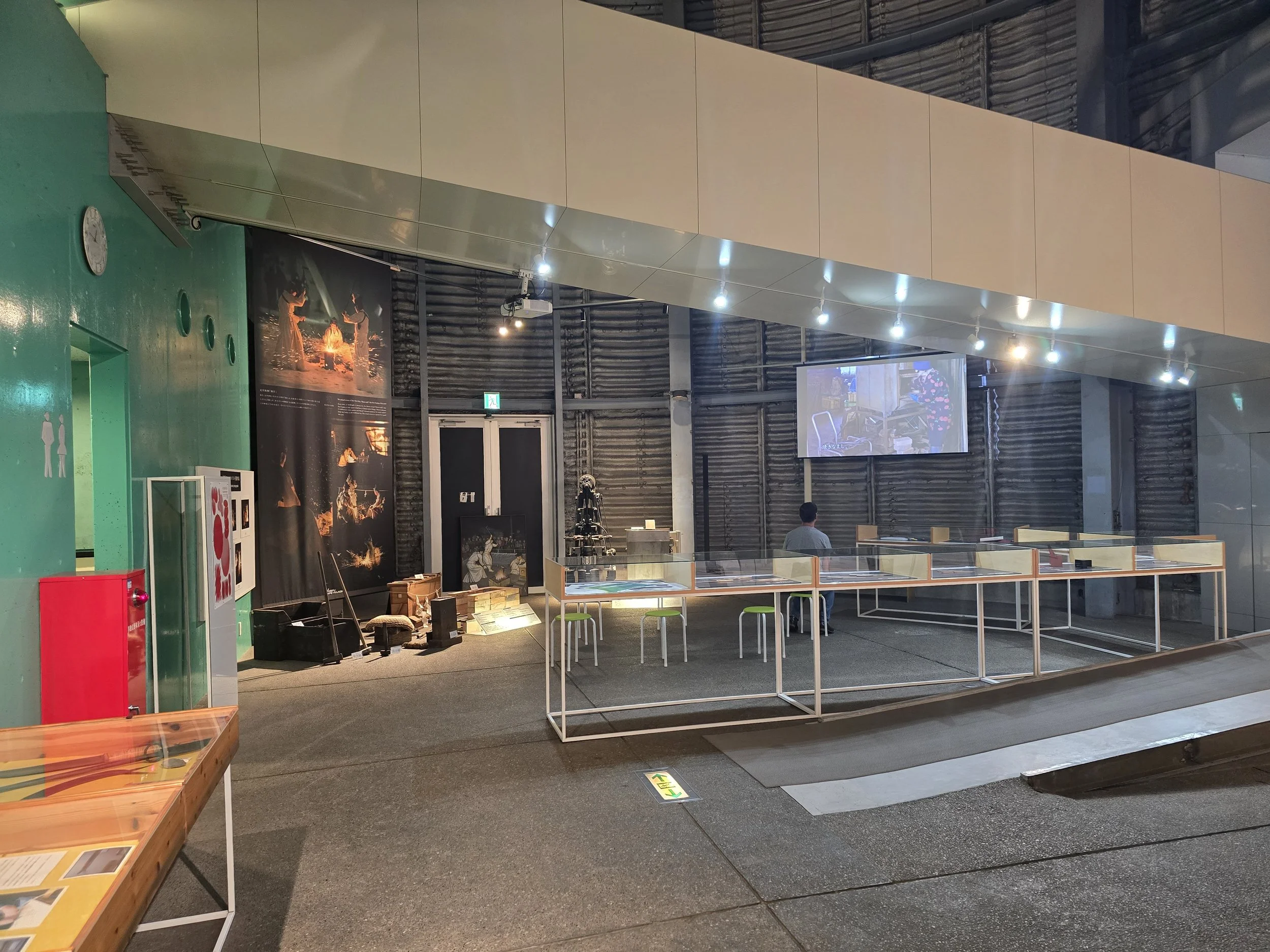
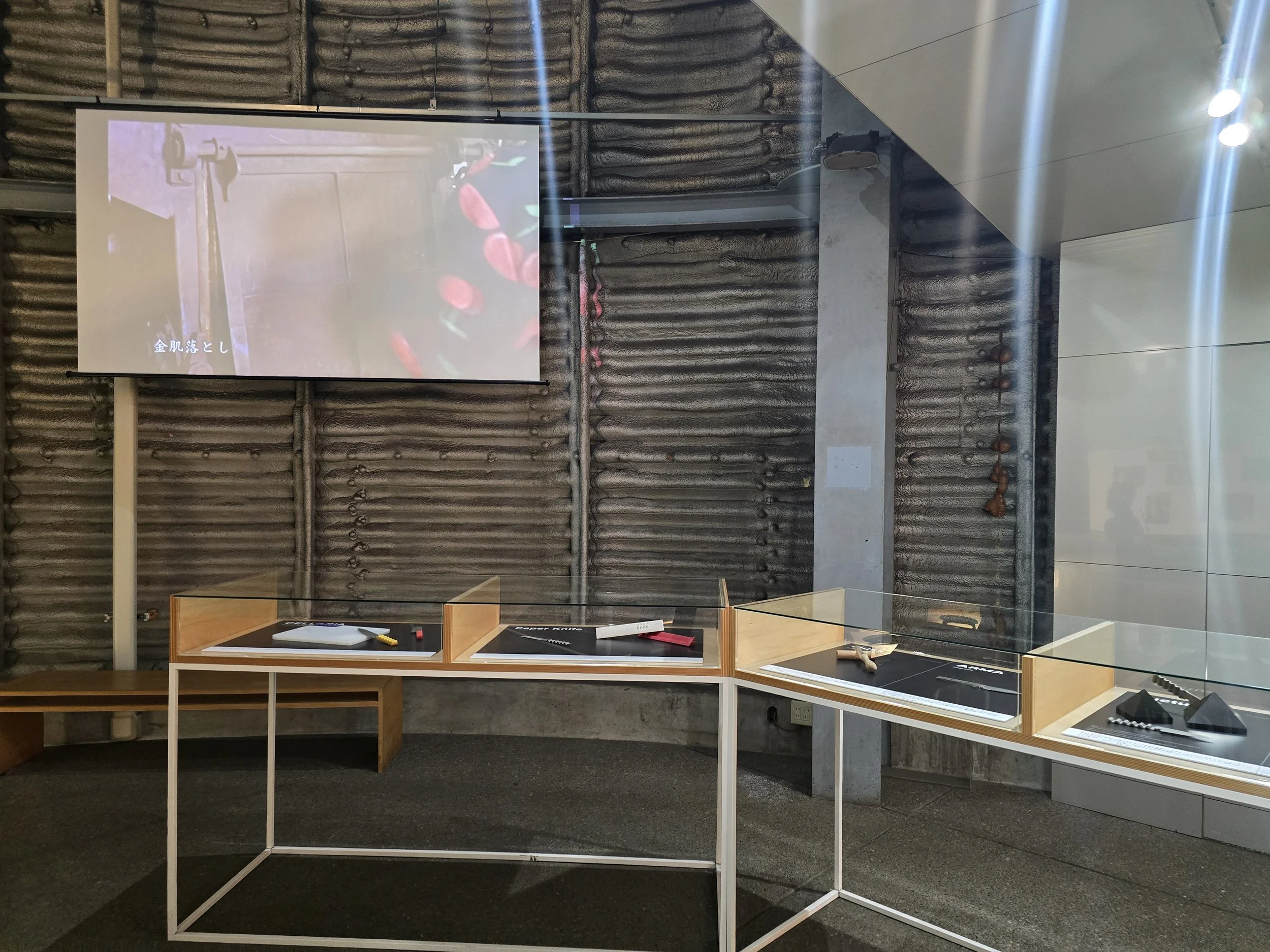
The wall displays of blades are also especially memorable. Seeing so many knife shapes and styles presented together makes the variety of Japanese knife-making much more obvious. There are different profiles, sizes, and forms for different uses, and even without reading every detail, the visual impact is strong. It shows just how refined and specialised the craft is. What might seem like a simple kitchen tool at first becomes something much more deliberate once you see the range on display. Especially when you are able to get your hands on one and start using it, the difference in the kitchen to myself is great. I do personally find great joy in pulling out these special knives every day, and while it may not be for everyone, for me it’s a real reason I enjoy cooking.
Another part of the space that worked well was the use of video alongside the exhibition. Watching footage of forging and workshop processes while standing in the quiet gallery created a nice contrast. While all the footage is in Japanese, the sound quality of the video and being able to watch the forging processes in itself was quite mesmerising. The museum itself feels calm and still, but the video reminds you of the heat, force, and rhythm involved in actually making the blades. That connection between the finished object and the intensity of the process is something photos online do not fully communicate. Unfortunately, on the day I went, there were no blacksmiths in the house producing, but you could see from an overview platform that sits over a workshop the black soot the leftover materials and half-made knives. It was really cool personally to see all the steps and processes that go into the knife that I use at home daily.
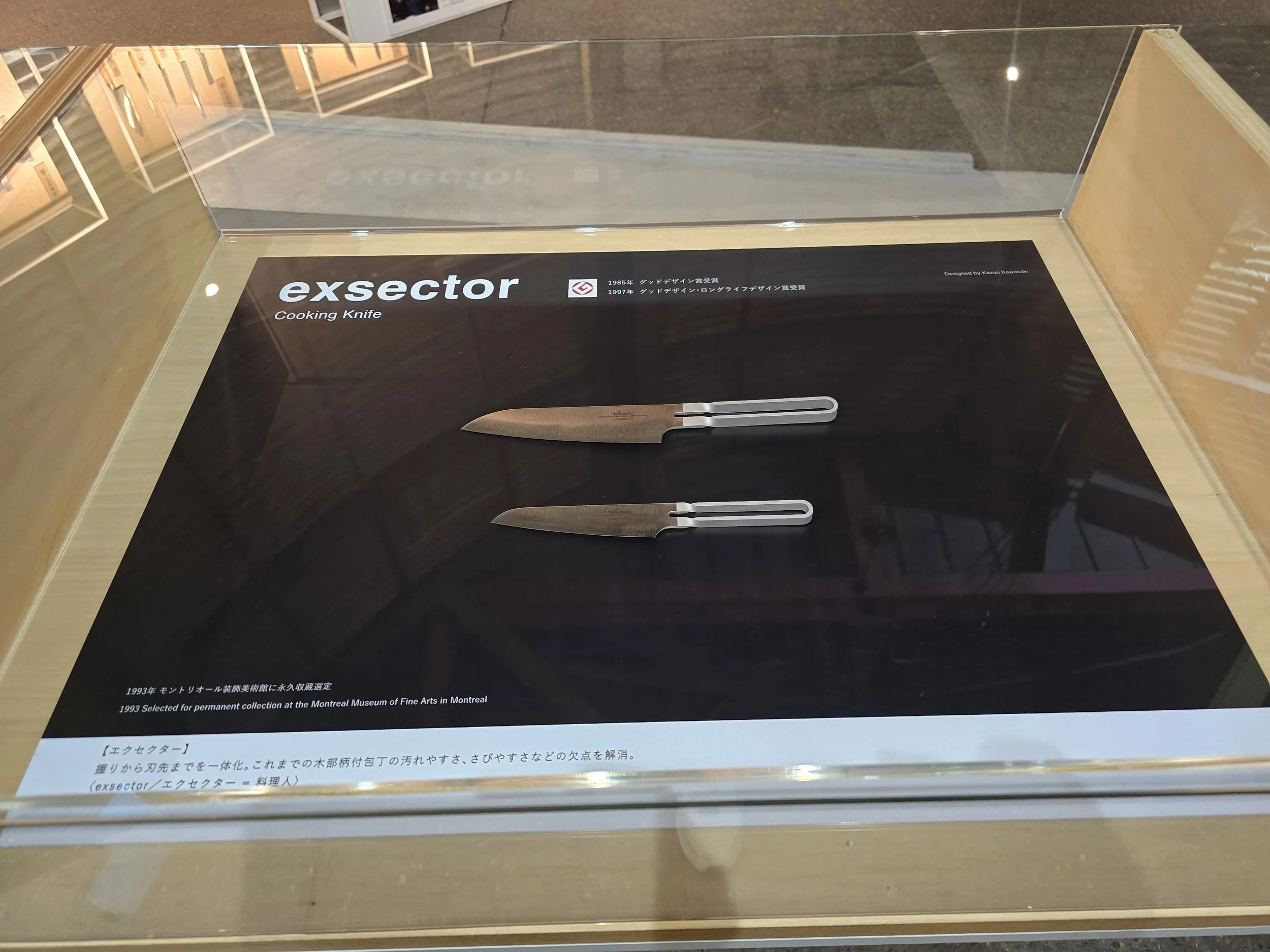
There were also some displays that showed a more design-focused side of the village. Pieces like the exsector stood out because they felt almost like industrial design objects as much as knives. That was interesting because it showed that Takefu Knife Village is not only about preserving older traditions. There is also room for experimentation, different aesthetics, and modern interpretations of what a knife can be. That balance between tradition and innovation is probably one of the things that makes the place so appealing.
I was able to pick up a carbon steel knife for around ¥23000 (unfortunately don’t have a picture) but honestly after only using stainless steel there is quite a noticeable difference! If you don’t have one and are have some budget I would highly recommend picking one up! (Do some research on them first!) They have a huge range of knives that you can by and while I forgot to take a photo. They have knives from many artisans so I’m sure you can find one that suits your style.
What I liked most about the visit was that it gave context to something I already appreciated from a distance. Owning knives from makers based there had already made me interested in the village, but actually visiting helped connect the object to the place. It made the knives feel less like isolated products and more like part of a wider craft culture. One tied to real people, workshops, and a specific region with a strong reputation for blade-making. If you’re in the area or looking for somewhere to go on a road trip, I would really recommend it. There are other artisan villages within the area that you can drive to that are worth visiting. Though if you don’t have time or still want knives, you can go to Kappabashi Street in Tokyo or visit their website to buy some knives online.
If you’re in the area a recommendation nearby is the Echizen lacquerware area in Kawada, especially Echizen Lacquerware Hall. Echizen lacquerware has a history of more than 1,500 years, and the hall lets visitors learn about the craft, see artisans at work, and in some cases join workshops. If you like objects that combine utility with long-term handmade finish, it pairs very well with the knife village because it shows a different side of Japanese everyday craft. The paper making village is also close by.
If you do not mind driving a bit further for another major regional craft, Echizen Pottery Village is worth considering as well. It brings together pottery-related facilities including the Fukui Prefectural Museum of Ceramics, workshop opportunities, and exhibition spaces.
